Ready to become safer and more efficient?
SafeRadio helps operations build safer, faster, and more consistent communication across the workforce.
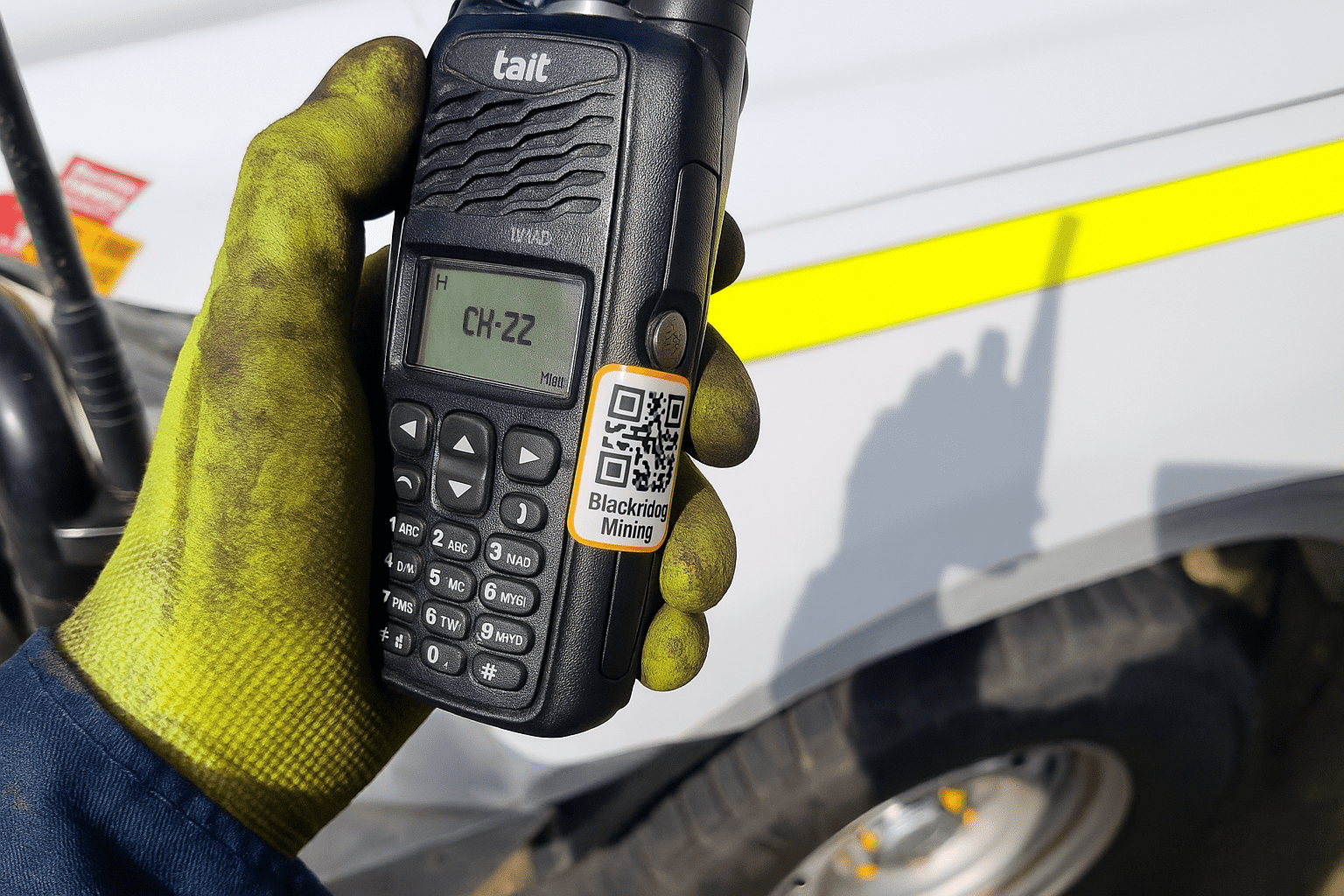
Easily manage and deploy training tools that enhance radio communication and operational knowledge, powered by standardised templates based on industry best practices.
Real-world incidents where improved radio communication standards and better training resources could have prevented serious accidents and even saved lives.
"The primary cause of the incident was that the light vehicle operator failed to comply with procedures when he… failed to establish positive communication before entering [the dozer’s] 50-metre work area. UHF radio positive communication procedures were not adequately enforced… workers routinely failed to follow requirements."
"The two operators were on different radio channels and other two-way radio calls from around the mine appear to have confused the LV driver’s perception of whether he was able to approach the dozer. Clear and unambiguous radio communications systems are a vital part of the safety system of every mine."
"Vehicle collisions involving load haul dump (LHD) units and personnel transports have been occurring frequently with 30 occurrences in the past 12 months." They were reported at mine entrances, outbye roads, production panels, and face zones.
"A review of these incidents has indicated that the predominant causes have been a lack or inadequate communication between people involved in the incidents… Have a system in place to audit the level of compliance to positive communication protocols… by direct observation by supervisors or the review of radio audio logs."
"Collisions with another vehicle are one of the top three high potential incidents reported by the coal mining industry. Positive communication is a critical, but administrative control."
"The water truck was watering on the offside of the excavator and had not used positive two-way radio communications with the excavator operator. As a result, the excavator operator, unaware of the hazard, has collided with the nearby water truck."
"Positive communication should be used as a minimum control where mobile plant interact, with both the caller and receiver identifying the relevant vehicle and clearly acknowledging the communication before any movement occurs." The drill-rig boom struck a light vehicle windscreen and stopped short of the cab. The regulator said the collision could easily have resulted in a fatality.
A light vehicle carrying three passengers collided with an integrated tool carrier at an underground mine. Two similar incidents had already occurred at the same site, and prevention measures had not been implemented.
"While approaching a dump tip head, a haul truck proceeded behind a dozer… without making positive communication." The Regulator’s review found “a lack of positive communication between operators that is repeatedly a factor in collisions.”
"A dozer and a haul truck collided at a tip head. Both vehicles were reversing at the time of the incident. A preliminary investigation suggests that the truck operator did not follow the site requirement for positive communications with the dozer operator."
"A truck operator arrived at the tip head and was unsure where to unload but recalled an earlier instruction from the dozer operator to tip against the wall." The haul truck operator had 11 weeks’ industry experience. The Regulator’s investigation considered communication, training, and supervision.
"A lack of positive communication between operators is repeatedly a factor in collisions… a high volume of radio traffic prevented communication to avoid a collision… operators using different radio channels within the same operating area. While no injuries have been sustained… the potential for serious or fatal injuries was present in each case."
"An excavator reversed into a dozer… When he realised the excavator was moving towards him, he attempted to make contact by radio. The radio was busy at the time, which prevented the dozer operator from making contact."
"Seeing the collision about to occur, the grader operator tried to make radio contact with the truck driver, who was on a different channel. No injuries were reported."
"A fellow crew member called a Mayday on the tactical channel being used for the operation, while Flynn called a Mayday and relayed pertinent information on an unmonitored channel." Investigators listed “member operating on the wrong radio channel” as a contributing factor and recommended departments ensure all members in the hazard zone are on the designated channel.
In Santa Fe County, New Mexico, firefighters “can’t use their radios to talk to their counterparts from other agencies because they operate on different channels.” First responders also reported coverage gaps that left an officer “pretty much left on his own.”
"I have to infer from my investigations that there were elements of systemic failure on the night of 5 August because the staff on duty did not respond adequately to this significant breaking news either due to a lack of training or clear enough instruction."
Go from zero to a fully structured operation-specific communication system, no complex setup required.
Select your industry to load a pre-built industry-specific communication template.
Add your company and operation name. ( Support for multiple sites and operations is built in ).
Generate structured comms resources; channel info, example radio calls, glossaries, channel comparison, and more.
Tailor content for your site, add local knowledge, then share via QR codes, training links, exports, and more.
Discover how our system can transform safety and efficiency at your organisation.
Standardise radio protocols and call quality across crews. Reduce confusion, channel errors, and the communication failures that lead to incidents.
Give new starters, contractors, and transferred personnel structured communication resources, so they are ready to work safely from day one.
Turn site-specific expertise into structured, shareable training resources. Tell departments what they need to hear and enhance overall efficiency.
Realistic radio call practice against structured templates. Measure protocol adherence, accuracy, completeness, and brevity, not just attendance.
Track pass rates, completion, engagement, and improvement across teams. Give leaders visibility into who is trained, active, and ready.
Deploy consistent communication standards across multiple operations. Compare sites, identify gaps, and roll out best-practice fast.
SafeRadio gives the people responsible for safety, training, and operations the tools they need.
Fewer communication failures and clearer emergency response.
Less radio confusion, faster coordination, fewer delays.
Faster onboarding and measurable readiness.
Standardised protocols across multi-site operations.
SafeRadio helps operations build safer, faster, and more consistent communication across the workforce.